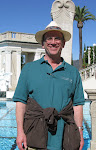

There's a story about how I saw The Grand Canyon, you know, that big gulch caused by the Colorado River and a rising of the Kaibob plateau about 10,000,000 years ago. My trip was from Las Vegas to that canyon in AZ, but the story is not written this time. I made a 15 minute video some of you might want to see.
I'm just testing if I know how to "embed" it per instructions of YouTube video. This video I shot on my early May vacation
Wednesday, June 1, 2011
Wednesday, April 20, 2011
Mary Travers Poem Completed
Wilby, a.k.a., Bill Belew accused some of us in the club of living off what we already wrote and doing no significant current writing. That I applies to 70% of us (my guess from the lack of contributions to the Writers Talk Newsletter). Well he made me feel guilty so I finished a poem I'd started months ago when Mary Travers (of Peter, Paul, and Mary fame) passed away. I include a few snippets here (it's a two page poem).
To Mary Travers
Richard Burns Copyright April 2011
Mary, with the crystal voice,
You beside the two bearded ones.
Dedication, passion, talent, luck, ambition, your time in history
Melded to make Peter, Paul, and Mary.
You with Peter Yarrow, the sensitive intellect,
Noel Paul Stoockey, the showy one with sound effects,
Strumming and singing,
Some tunes new, some familiar,
Harmonies honed to lean perfection.
Practice sessions searching, rearranging,
Seven months of finding out what works,
Your group’s debut at The Bitter End,
A happening place,
Built of brick on Bleaker Street,
Greenwich Village.
That's how it starts. Here's how it ends.
Thanks for the sound of hope.
Thanks for the feeling that
“Things are pretty terrific and will even get better.”
Thanks for that fire you and Peter and Paul lit in me
And the fleeting vigor that can still pulse in my blood
When I hear truth sing.
I heard that children loved you
I heard that children loved you
And you loved children.
I know many, many adults will miss you.
I can hope I won’t miss you as much.
I can hope I won’t miss you as much.
Eight of your albums lean in original covers,
Still right next to my turntable and hi-fi.
I keep it in good repair.
Hope your writing is going well. -rb


Halloween Costume Party, CWC, South Bay Writers
This may be ancient news, but I'm practicing embedding videos. I (and Mike Freda) shot a video of the Halloween Costume Contest taken at our October 12, Tuesday night meeting. There are some familiar faces in unfamiliar get-ups. The contest was a lot of fun and some were definitely in the spirit of the thing. I'm Abraham Lincoln, so friend and great writer, Mike Freda shot that footage of the line-up with my camcorder. We are supposed to have chosen a famous writer or someone who's a character in a famous or infamous book, but really, just about anything goes. This merriment takes place at the Lookout Restaurant (affiliated to The Sunnyvale Golf Course, CA). Enjoy.
Saturday, February 19, 2011
Writer's Block
Writer's block. What's that? I got writers deluge, and have no clue where to start. I'm bailing the liquid out of my boat with two buckets and getting winded in the process. --I posted this on Facebook minutes ago. Not sure if there's an action item in there somewhere. Write something, I guess. Anything.
Thursday, February 17, 2011
Writing Tip: Leave It Out
We writers think, oh, boy, there's another creative sentence that shows up in our mind. It fits the story, the narrator's voice, the characters jargon. It's perfect. It's something more, and it's good so we put it in.
Watch that tendency to think every "good" thought that's relevant belongs in your current project. Very often it's a mistake, and too many of these wrong choices will prevent you story from getting published and/or read.
What does your brilliant new idea do for the story? To the pace of the story? Does it slow things down? Does it read too long with your brain child entered. Look at it three days later. Now, does it read long, seem clumsier than you thought, putting a goddam speed-bump in the pacing? We all hate speed-bumps. You can bet the reader hates them too. Even though the idea, sitting alone, is a brilliant idea, brilliantly stated. It's almost great, showing off, even, but heavens to Betsy, you really do like that line.
Put the brakes on. One of the talents of a superior writer is knowing when not to put the good writing in the story. Unpublished writers have a very hard time always recognizing this in practice. My guess is every single page of your project has at least one or two sentences that aren't essential to the story, to the character building, to the suspense and conflict you are trying to get across to King Reader.
With all my railing against redundancy, I'm sure I understand this and know tons of examples in my own work. But I continue to catch myself putting all my good thoughts into the story.
Tip: Most of the time, leave it out. That goes double if it comes to you during a rewriting session. You should be striving to dump 50% of your words, not the other way around.
Less is more. Remember it, and live it! Your readers will love your writing for it. They'll be turning pages like crazy.
Saturday, January 29, 2011
Apparently, A Word I Use Too Much
Okay, I found another word (see previous article) that I habitually use. The word is "apparently." The use of it, even once (unless it's inside dialog or in a first person's quirky habits of use) is most likely redundant.
On to other comments: Yesterday, I polished a song I had written 20 years ago and turned it into a poem. Can rhyming poetry have a refrain line? Or a bridge section? I guess I could use poetic license and do it, anyway.
I woke up a bit too early this morning, (Saturday) Jan 29, 2011, with an extraordinarily busy mind; a thousand little poems racing around in there. Pat Bustamante's challenge to my South Bay club poetry writers is to make them short. Trite seems to be allowable. Unfortunately, I'll not remember them all. (Maybe, that's fortunate.)
Let me start one here, I'll polish it later.
It's Golf
Watch the V's in your grip,
Head down the round trip.
Straight left arm and don't rush it.
Long, wide arc, you'll crush it,
Be firm, no self-doubt,
Follow through, inside out.
I've got it wrong, apparently.
It's golf that's got its grip on me.
Hey, you know, that's not too bad. Still a little lengthy for Pat, I fear. Write on, friends. ;^)
Friday, December 24, 2010
Creating: The Villain Next Door
This “guest post” is by one of the authors of Writing Fiction for Dummies, Randy Ingermanson, one of my heroes for creating publish-quality stories. He personally invited me to steal this article from his E-zine that I subscribe to. There are some good pointers. If you’re resistant to these particular points, at least hopefully I’ve made you think a little.
Extracted from “Advanced Fiction Writing E-zine,” received Dec 20, 2010
By Randy Ingermanson
Creating: The Villain Next Door
One of the most common types of characters in a novel is the villain--a person directly opposing the protagonist.
Writing villains is hard. The reason is that you, the author, are likely to dislike your villain. You probably find it hard to relate to your villain. You don't understand what makes him tick. Therefore, it's all too tempting to make him a two-dimensional character whose sole purpose is to be bad.
The problem with that is that villains don't believe they're bad. Villains generally believe they're the good guys. Villains believe that the story is their story.
I've been reading a book lately titled THE SOCIOPATH NEXT DOOR, by Martha Stout, Ph.D., and I think it's valuable to any novelist who wants to write a real, live, breathing, three-dimensional villain.
We'll define a sociopath, as Dr. Stout does, this way:
A sociopath is a person who lacks a conscience. A sociopath feels free to do anything without any sense of shame, guilt, or remorse.
You might imagine that people like that are pretty rare. One in a million, maybe. Or one in ten thousand.
According to Dr. Stout, those estimates are way low.
According to her, about 4 in every 100 people is a sociopath.
That's pretty shocking. Scary even. It doesn't mean that 4% of all people are psychopathic murderers. Those are pretty rare. It means that 4% of all people match the standard psychiatric definition of "antisocial personality disorder."
The sociopath category is pretty broad. A rare few sociopaths become serial killers. Most of them do their best to fit in with a world of people they can't relate to at all -- people hobbled with consciences.
There are plenty of places to fit in.
An extremely intelligent sociopath can do well in business or politics or the military, where ruthless domination of others might actually be rewarded.
(Obviously not every businessman or politician or military professional is a sociopath.)
Less gifted sociopaths may find a niche in some job where they exercise authority over a few others and enjoy making life miserable for them.
Sociopaths with average talents are often full-time moochers, living off somebody else by arousing pity.
Plenty of sociopaths gravitate to crime. Surprisingly, the majority of criminals are NOT sociopaths. Studies show that only about 20% of prison inmates are sociopaths. But that 20% account for more than half of the most serious crimes.
If you decide that the villain in your novel should be a sociopath, what features should your character have?
To get the fully detailed answer, I recommend that you read THE SOCIOPATH NEXT DOOR or some similar book.
Please note that reading one book on sociopaths will not make either you or me an expert, but these are the high points that I picked up from the book:
* Sociopaths know the difference between right and wrong. There is nothing flawed in their understanding of basic morality. However, when they do wrong, they don't FEEL any sense of shame or guilt. Therefore, they can justify anything they do by blaming the victim or the economy or society or circumstances or Satan or the weather or whatever.
* Sociopaths often are extremely charming. They study normal humans and learn which buttons to push in order to get the responses they want. So the stereotype of the charming villain is based on reality. This skill is critical for sociopaths climbing the corporate ladder or making a career in politics or wangling into a romantic relationship.
* Sociopaths are extremely good at detecting potential victims. Whether they're looking for somebody to marry, somebody to mug, or somebody to mooch, they quickly home in on the one who'll give the biggest payoff.
* Sociopaths don't love anybody. They may say all the right words, but they never really mean them.
* Sociopaths crave pity. This may seem astonishing, but one of the most reliable indicators that somebody is a sociopath is their relentless attempts to arouse pity in the people they're victimizing. A typical sociopath can turn on the "crocodile tears" on command.
* Sociopaths are easily bored. So are children and young teens, of course, but normal people grow out of their boredom as they mature. Sociopaths don't. Because of that, they crave excitement, which causes them to take crazy risks which endanger themselves and other people. Those risks can lead to spectacular successes in business, politics, and war. They can also lead to spectacular failures.
* Sociopaths don't want to get better. They rarely try to get treatment unless forced to, because they think they're just fine the way they are -- it's the rest of the human race that's screwed up.
* Sociopaths sometimes "do the right thing" -- if it gains them something. That may be public approval or it may be a heightened self-image. But their reason for doing the right thing is always based on what they THINK, not on what they FEEL. Doing wrong doesn't make a sociopath feel bad and doing right doesn't make him feel good.
* For a sociopath, life is about winning. Other people are there to be controlled or to provide points in the game. Relationships with those pesky people have no value, unless the relationship contributes to winning.
In writing a character––any character––you must find a way to get inside that character's skin. You must think as they think and feel as they feel.
That doesn't mean that you have to become a sociopath in order to write a convincing villain. It means you need to be able to IMAGINE being a sociopath.
And that's not so hard. Novelists typically have extremely high empathic skills. A novelist is required to imagine that he or she is a person of a different gender, age, ethnic group, social stratum. Many novelists need to imagine that they live in a different time or a different place.
If you can imagine all that, then you can imagine that you have no conscience and don't want one. When you do that, you'll understand your villain in a whole new way.
Award-winning novelist Randy Ingermanson, "the
Snowflake Guy," publishes the Advanced Fiction Writing
E-zine, with more than 23,000 readers, every month. If
you want to learn the craft and marketing of fiction,
AND make your writing more valuable to editors, AND
have FUN doing it, visit
Download your free Special Report on Tiger Marketing
and get a free 5-Day Course in How To Publish a Novel.
Subscribe to:
Posts (Atom)